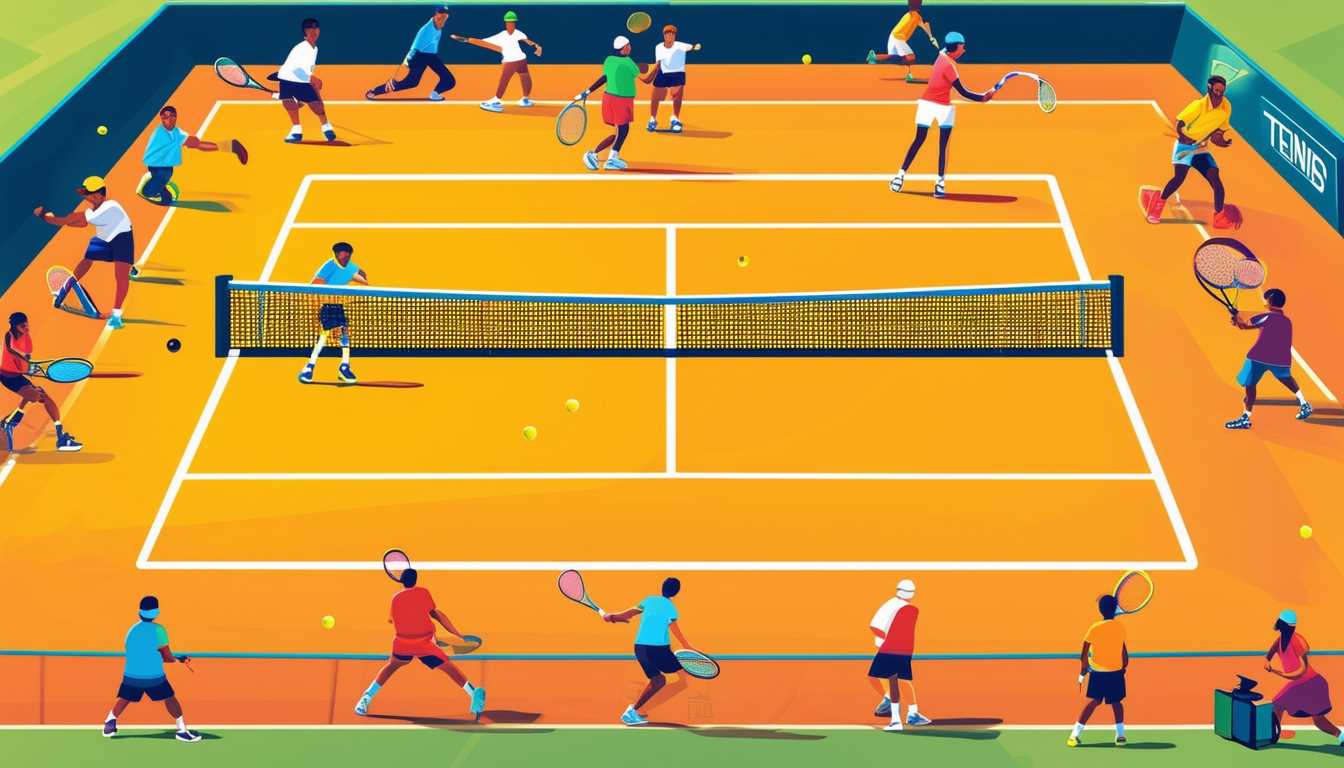
Teaching Tennis Skills To Adult Learners

Teaching tennis to adults comes with its own set of challenges and rewards, different from teaching kids. It’s crucial to understand what motivates adult learners, how they learn best, and what their physical limits are. This helps in creating a program that not only focuses on tennis techniques but also creates a welcoming and encouraging atmosphere for learning new skills.
When we think about breaking down technical skills, improving fitness, and promoting regular practice, it’s important to find a good mix of hard work and fun in teaching tennis to adults. How do instructors adapt their methods to suit the varied needs of adult learners while making sure they keep getting better and remember what they’ve learned?
Teaching tennis to adults needs a special approach, unlike teaching younger folks. It’s important to get what drives adult learners, their way of learning, and their physical strengths. This insight helps in designing a program that’s not just about the tennis techniques but also builds a supportive and motivating space for picking up new skills.
Looking at ways to make technical skills simpler, boost physical fitness, and encourage regular practice, it’s key to strike the right balance between discipline and enjoyment in adult tennis classes. How can teachers adjust their strategies to fit the different needs of adult learners while ensuring they continue to improve and hold onto their skills?
Understanding Adult Learners
When we talk about teaching tennis to adults, it’s essential to recognize that they come to the court with a diverse set of experiences and reasons. Some might be there to stay fit, others to meet new people, and a few might want to conquer the challenge of learning something new. Knowing why they’re interested in the game helps tailor lessons in a way that resonates with them. It’s critical to set achievable goals and to acknowledge every bit of progress. This approach keeps learners motivated and engaged.
Adults generally know themselves pretty well. They can tell you what’s working for them and what’s frustrating without much prompting. This self-awareness is a powerful tool for any instructor. It allows for the adjustment of teaching methods, the speed of instruction, and the type of feedback given, making the learning process more effective and enjoyable. For example, if a learner is struggling with their serve, an instructor might use video analysis software to break down the mechanics and provide visual feedback, a method that can be particularly effective for visual learners.
Furthermore, adult learning isn’t just about hitting balls back and forth; it’s also about building a community. Tennis can be a social sport, offering opportunities for adults to connect and form friendships. Organizing small tournaments or social mixers can be a great way to enhance this aspect, providing a fun and competitive environment that enriches the learning experience.
Creating a Supportive Environment
Creating a supportive learning environment is crucial for adult learners who are trying to improve their tennis skills. This type of environment helps them feel more confident and encourages them to keep practicing, even when it gets tough. To achieve this, it’s important to build a strong sense of community among the learners. For example, you can organize small competitions or group practices where everyone cheers each other on. Celebrating someone’s good shot or offering advice on how to handle a challenging move can make a big difference in keeping motivation high and making the learning experience enjoyable for everyone.
As an instructor, being approachable and adaptable is key. Every learner has different needs and progresses at their own pace. Some might benefit from visual demonstrations, while others might prefer verbal instructions or hands-on practice. Pay attention to these preferences and adjust your teaching methods accordingly. When giving feedback, be clear and direct. Instead of saying ‘That wasn’t very good,’ try something more constructive like, ‘Try bending your knees more when you swing. It will give you better control.’ This way, learners know exactly what to work on, and they don’t feel discouraged.
In addition, it’s helpful to use real-life examples or stories from well-known tennis players to illustrate certain points or techniques. This not only makes the lesson more interesting but also shows learners the practical application of what they’re learning. For instance, discussing how Serena Williams perfected her serve can inspire learners and give them a concrete goal to aim for.
Ultimately, the goal is to create an environment where adult learners feel valued and motivated. By focusing on emotional support and adapting to their individual needs, you can help them grow not just as tennis players, but also as confident individuals who are not afraid to take on new challenges. Remember, the most important part of learning is not just improving skills, but also enjoying the journey.
Simplifying Technical Skills
Teaching technical tennis skills to adults doesn’t have to be daunting. The key is to deconstruct the complex movements into simpler, digestible pieces. Begin with the grip. It’s crucial for learners to grasp (pun intended) how minor adjustments can change the game. Explain this with clear, real-life examples, like how tightening or loosening the grip affects the ball’s spin and speed.
Next, move on to stance and footwork. Here, visual aids can be your best friend. Show pictures or videos of professional players in action, pointing out how their stance changes with different shots. Demonstrating yourself, or using a learner as an example, can also make a big difference. This visual and practical approach helps learners understand the importance of positioning.
When you tackle the swing, break it down into the backswing, the contact point, and the follow-through. Teach each segment separately, using slow-motion videos or frame-by-frame analysis to illustrate. This makes it easier for learners to understand each part’s role in creating a smooth, effective swing.
Incorporate drills that isolate these skills. For example, use a drill focusing solely on the backswing, without worrying about hitting the ball. This allows learners to concentrate on one aspect at a time, making the learning process less overwhelming. Providing immediate feedback during these drills is crucial. Highlight what they’re doing right, not just what needs improvement, to boost their confidence.
By approaching tennis teaching with this structured, step-by-step method, learners can track their progress. They’ll see how mastering each element contributes to their overall game improvement. This not only simplifies the learning process but also makes it more rewarding and enjoyable.
Building Physical Conditioning
For adults who are keen on improving their tennis game, crafting a solid physical conditioning plan is a game changer. This plan isn’t just about hitting the gym randomly; it’s a strategic approach to enhance endurance, strength, and agility, directly impacting your performance on the tennis court. Let’s break it down into manageable chunks, highlighting why each component matters and how you can effectively incorporate them into your routine.
First up, let’s talk about cardiovascular fitness. This is your stamina engine. Think of it as the fuel that keeps you going, match after match. Cardio exercises like running, cycling, or even brisk walking can do wonders here. They help you stay active longer without gasping for breath. Imagine you’re in a long rally, and you’re still able to sprint for that drop shot. That’s cardio at work.
Next, strength training is your best ally for powerful serves and groundstrokes. Focusing on your legs, arms, and core, you can use free weights, resistance bands, or even your body weight to build muscle. For example, squats and lunges strengthen your legs for that explosive movement, while push-ups and planks build arm and core strength for more forceful shots.
Flexibility is another key piece of the puzzle. It’s not just about being able to do splits. Exercises like stretching and yoga improve your range of motion, making it easier to reach difficult shots. Plus, they lower your risk of injuries, keeping you on the court instead of on the sidelines. Think of it as your body’s way of ensuring it can handle whatever the game throws at it.
Agility drills are your secret weapon for quick footwork. These exercises train you to change direction swiftly, allowing you to cover the court more effectively. Cone drills or ladder drills are great examples. They mimic the movements you make during a match, helping your body remember and execute them more fluidly when it counts.
Encouraging Consistent Practice
For adult learners looking to enhance their tennis skills and physical condition, establishing a routine is crucial. Begin by selecting specific days and times weekly for your tennis sessions, making this commitment as integral to your schedule as any important meeting. This approach helps ensure that practice doesn’t become an afterthought in your busy life.
Diversifying your practice routines is another vital strategy. Instead of repeating the same drills, mix things up by focusing on various tennis skills during different sessions. For example, dedicate one day to improving your serve and another to mastering your volley. This variety not only keeps your practice sessions interesting but also ensures a well-rounded development of your tennis abilities.
Monitoring your progress is both inspiring and essential for sustained improvement. Consider keeping a journal where you note your observations and achievements after each practice. Alternatively, recording your practice sessions can provide you with a valuable perspective on your technique and progress. Watching yourself play can help identify areas for improvement that you might not notice in the moment.
Finding a practice partner or joining a local tennis club can significantly enhance your practice experience. Playing with others introduces a social element that makes practice more enjoyable and can motivate you to stick with your routine. Moreover, practicing with someone who has similar goals or a slightly better skill level can push you to improve.
Conclusion
To wrap it up, teaching tennis to adults means getting a few things right. First, recognize that adults learn differently, so we need to get on their wavelength.
Creating a welcoming and positive space is key because it encourages them to keep at it, even when it gets tough. Breaking down the fancy tennis moves into bite-sized pieces helps a lot too; it makes the whole thing less intimidating.
Don’t forget about getting them physically fit – it really boosts their game. And, of course, practice makes perfect. The more they play, the better they get.
So, by sticking to these tips, we can help adult learners not only get better at tennis but also have a great time doing it.